
Notes on Building for Teachers: What Most AI Tools Miss About Education
Simplicity, Precision, Thoroughness, Delicacy

The real pleasure of design is in the process of awakening gradually to the multitude of accumulated insights interwoven with that environment.
Kenya Hara, Designing Japan
To design a tool is to imagine a form of life.
We can call this form of life an occupation (and for some folks, a preoccupation). Each and every occupation (whether work or recreational) comes with its own jargon, concepts, operations, and procedures codified into practice. We can refer to the codified practices as a kind of grammar. This grammar, mastered through repetition and accumulated experience in our occupation, shapes our perceptions, assumptions, heuristics, metaphors, and biases about the world. The shorthand used by a carpenter differs from that of a doctor or a tabletop gamer. The metaphors used by a chef to think about the world are different than those of a teacher.
The tool you design must fit within the form of life it is meant to accompany. More than fit, however, the tool should subtly elevate and express that occupation to its peak potential. The tool should not be ostentatious in its elevation unless, of course, the occupation calls for ostentatious displays (a double-neck Gibson SG comes to mind).

Designing a workspace for teachers is not the same as designing a tech “platform.” Any piece of educational technology is attempting to cohabitate with a grammar of practice that long predates the technology: routines, constraints, expectations, procedures, and mental models—hundreds of micro-decisions compressed into 45-minute class periods. In making a tool that fits within this context, the simple claim “we save teachers’ time” is almost offensive in its banality. Time is not an inert substance to be hoarded. Time saved is meaningless unless it points toward something—toward reflection, toward better methods of instruction, toward more humane classrooms. Time is not saved, only reinvested. If your design doesn't clarify what kind of reinvestment it imagines, then it is failing its users for lack of imagination. However, bad incentives can also influence design and lead a tool astray.
Design that begins with metrics like engagement, session length, or LTV quickly forgets the form of life it claims to serve. When metrics become targets, they cease to be good metrics and devour the meaning of the practice itself. This is how tools become extractive, and I believe this fallacy of extractive engagement goes a long way to explaining the "enshittification" of so much consumer software.

The educational technology tool, in its best form, clarifies and concentrates the work of teaching and learning. It makes the tacit knowledge of the field explicit, it isolates our focus on the essential, and it gives contours to those things previously felt, but unnamed (here I am thinking of the heuristics we have, like “space your practice,” or “do a review.” Things which may be effective, but are imprecise in execution). A good tool, like a good sentence, achieves inevitability. It could not be otherwise.
Design is the discipline of attention to use. The aim of design in educational technology is not to disrupt or stylize, but to serve. A tool designed with care reflects a belief that even the most ordinary tasks deserve extraordinary respect. The height of design is to make a completely ordinary tool that fits perfectly into the user’s daily activity.
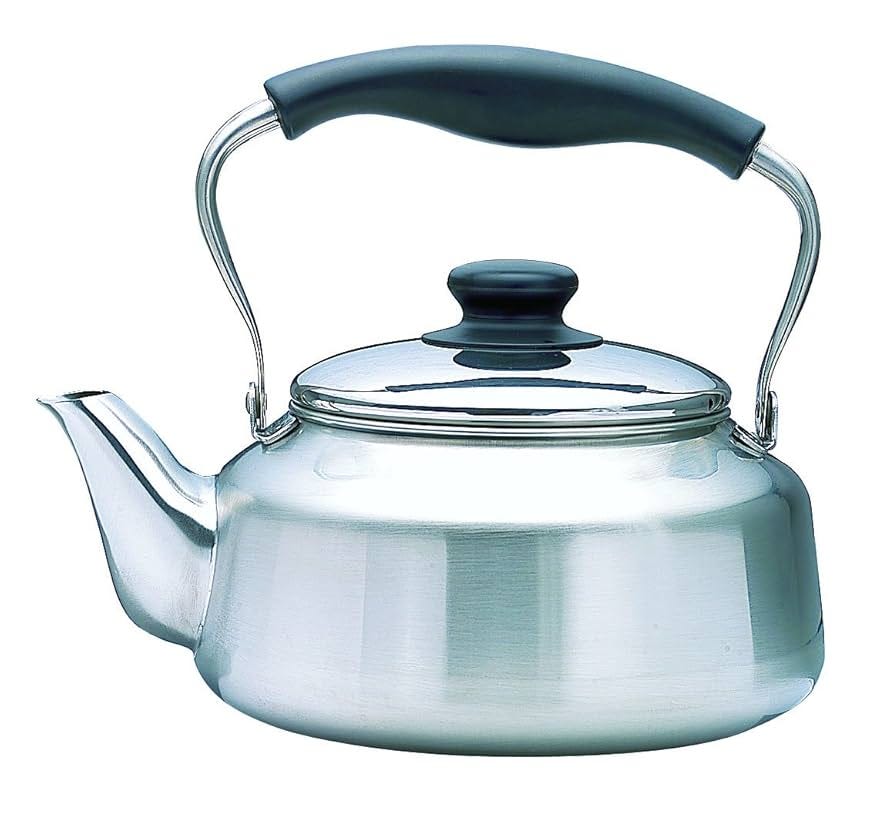
Let’s state the virtues plainly:
Simplicity
Not the startup virtue of “minimalism” as a euphemism for underbuilding, but simplicity as the elegance of necessity and the stark beauty of utility. This means boiling down your tool to the point at which nothing can be removed without consequence.
Precision
A fittingness between form and function. Precision is the sense that the tool respects its own purpose and is neither looser nor tighter than what is called for.
Thoroughness
Completeness without spectacle. This necessarily means a respect for edge cases and a refusal to outsource difficult challenges. A thorough tool anticipates how the user’s needs shift over time and builds around that arc.
Delicacy
This is the rarest virtue in software. It is an understanding that the user is not merely an input vector, but a human situated in a unique form of life. Delicacy means restraint in service of dignity, a kind of respect for the end user.
I owe a significant debt here to Kenya Hara, the Japanese Graphic designer, whose books have been a great source of inspiration. Especially his text, Designing Japan